

Hinges are the essential components that allow doors to function correctly, enabling smooth opening and closing. Using the incorrect number of hinges can lead to problems like sagging or sticking doors. This guide will focus specifically on how to determine the right number of hinges for your door.
How Many Hinges Does Your Door Need?
A general guideline suggests using one hinge for every 30 inches of door height, or any fraction thereof. However, several factors can influence this.
Factors That Influence Hinge Quantity
Door Height: The height of the door is the primary factor. Doors up to 5 feet tall generally need two hinges. Doors between 5 and 7.5 feet usually require three hinges. For doors from 7.5 to 10 feet, four hinges are commonly recommended. For doors taller than 10 feet, add one hinge for each additional 2.5 feet or fraction thereof.
Door Weight and Material: Heavier doors, like those made of solid core wood, metal, or glass, exert more stress on hinges and often require additional support. Exterior doors also typically benefit from at least three hinges due to their increased weight and potential exposure to the elements. For doors exceeding approximately 90 kg (200 pounds), it’s generally recommended to use four or more stronger, heavy-duty hinges. Doors weighing between approximately 40 kg to 80 kg (88 lbs to 176 lbs) often require three hinges.
Door Width: Wider doors, especially those exceeding 36 or 37 inches, may need an extra hinge for better support and to prevent warping or sagging. Doors wider than 48 inches might also need additional hinges.
Frequency of Use: Doors in high-traffic areas might benefit from more robust hinges and potentially a greater number of them to withstand increased wear.
Recommended Number of Hinges Based on Door Height, Weight, and Width
The following table provides a general guideline for the number of hinges recommended based on door height, approximate weight, and width. Keep in mind that these are general recommendations, and specific situations might require adjustments. Doors wider than 36 inches often benefit from an additional hinge.
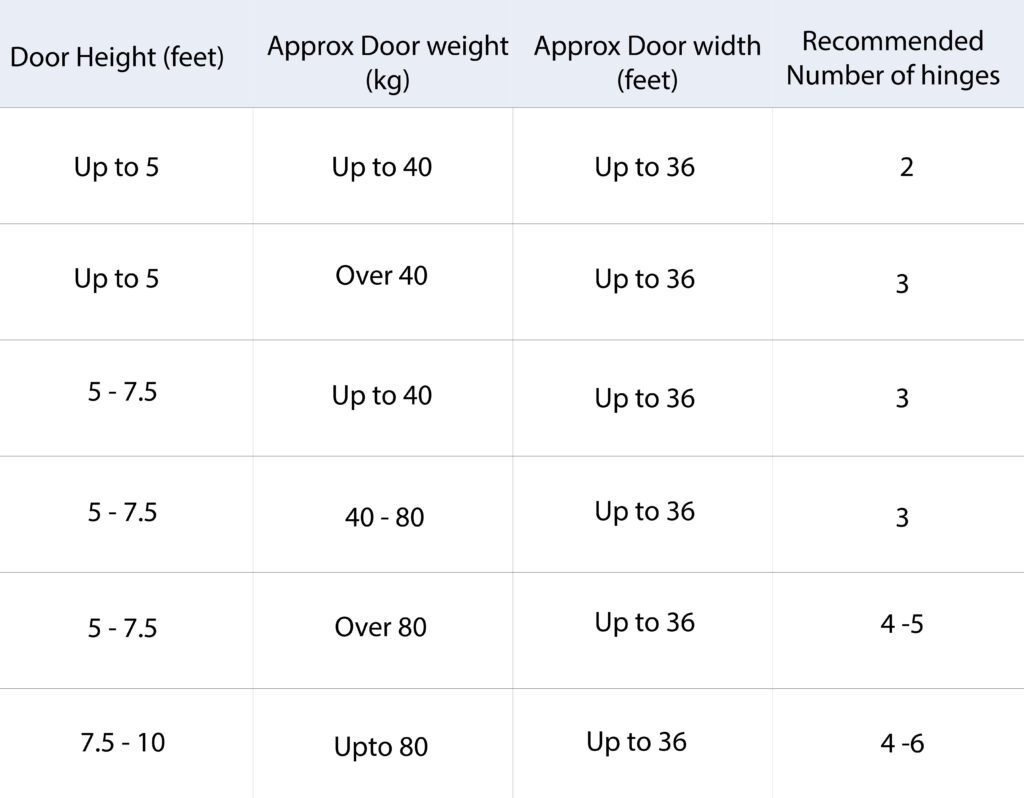
For doors significantly heavier than average for their height, or wider than 36 inches, consider adding an extra hinge for increased stability and longevity. For doors exceeding approximately 90 kg, it is generally recommended to use at least four heavy-duty hinges.
Hinge Placement
While the number of hinges is important, their placement also matters. Generally, the top hinge should be placed about 5 inches from the top of the door, and the bottom hinge around 10 inches from the bottom. If using a third hinge, it should be placed evenly between the top and bottom hinges. For taller doors requiring four hinges, space them evenly.
Conclusion: Ensuring Proper Support
Choosing the correct number of hinges is vital for the smooth operation and longevity of your doors. By considering the door’s height, weight, and width, you can ensure adequate support and prevent issues like sagging and sticking. When in doubt, it’s often better to err on the side of using an extra hinge, especially for heavier or wider doors.
Read also : A Comprehensive Guide to Hinge Finishes
Follow us on youtube : Arrow Industries